
Flexible Packaging Quality Control in Modern Manufacturing
Flexible packaging has become a dominant solution in food, pharmaceutical, and consumer goods industries due to its lightweight structure, cost efficiency, and excellent barrier performance. However, these advantages only deliver value when supported by a robust quality system. Flexible packaging quality control ensures that packages protect products, maintain shelf life, and meet regulatory and customer expectations.
Quality control in flexible packaging focuses on material strength, seal integrity, and resistance to mechanical stress. By understanding standardized testing methods and applying reliable instruments, packaging professionals can identify risks early and maintain consistent production quality.
Quality Control in Packaging: Food Packaging Leak Detection and Plastic Tensile Strength Test
Plastic tensile strength test, food packaging leak detection, and quality control in packaging form the technical foundation of flexible packaging evaluation. These tests address two critical failure modes: material rupture and package leakage.
ASTM D882 defines the plastic tensile strength test for thin plastic films and sheets. It measures tensile stress, elongation, and modulus, which directly reflect film strength and flexibility. ASTM D3078 focuses on food packaging leak detection by identifying gross leaks in flexible packages using vacuum methods. Together, these standards support systematic quality control in packaging operations.
Why Flexible Packaging Quality Control Matters
Flexible packaging materials experience tension during forming, filling, sealing, stacking, and transportation. Weak films may tear, while poor seals can allow oxygen, moisture, or microorganisms to enter the package. These failures compromise product safety and brand reputation.
Effective quality control in flexible packaging helps manufacturers:
- Prevent material failure during processing and handling
- Ensure seal integrity for food safety and shelf-life stability
- Maintain compliance with international standards and customer specifications
- Reduce waste and recalls caused by undetected defects
By integrating tensile and leak testing into routine inspection, companies establish a proactive quality culture rather than relying on end-product inspection alone.ication ensures tablets remain strong without compromising disintegration or bioavailability.
Plastic Tensile Strength Test for Flexible Packaging Films
The plastic tensile strength test evaluates how flexible packaging films respond to stretching forces. According to ASTM D882, a specimen with uniform cross-section is loaded in tension using a mechanical testing machine. The test records force and extension, allowing calculation of tensile strength, elongation at break, and elastic modulus.
These parameters provide insight into film performance:
- Tensile strength indicates resistance to tearing and rupture
- Elongation reflects flexibility and toughness
- Modulus represents stiffness and handling behavior
Film thickness, grip method, and test speed influence results, so strict control of test conditions remains essential for reliable comparison. In quality control, tensile data help detect formulation changes, processing drift, or supplier variation before defects reach the market.
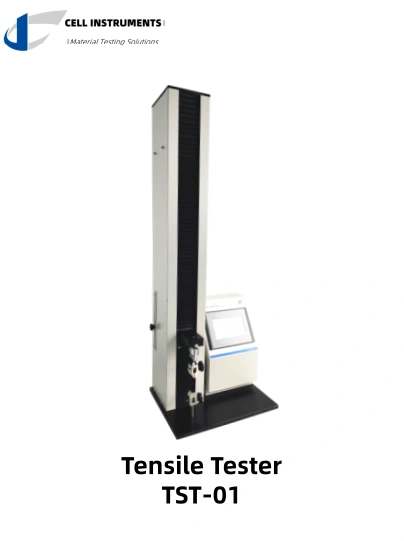
The Cell Instruments TST-01 Tensile Tester supports ASTM D882 testing with precise load control and stable measurement, making it suitable for routine flexible packaging quality control and material qualification.formulation and compression variables.
Food Packaging Leak Detection and Seal Integrity
Even strong films fail to protect products if leaks exist. Food packaging leak detection focuses on identifying unintended openings that allow contents to escape or external substances to enter. ASTM D3078 describes a vacuum-based method to detect gross leaks in flexible packages containing headspace gas.
During testing, a package is submerged in water inside a vacuum chamber. When vacuum is applied, air escapes through leaks, forming visible bubbles. This method provides a practical and visual approach to seal integrity testing, especially for pouches and sachets used in food packaging.
Leak detection sensitivity depends on package structure, product characteristics, and test parameters. While very small leaks may remain undetected, ASTM D3078 remains a widely accepted method for routine quality control in packaging lines.
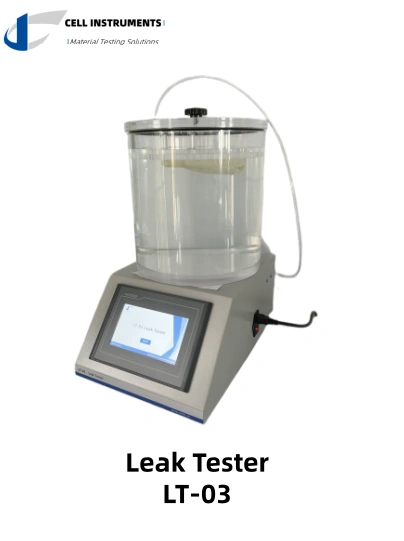
The Cell Instruments LT-03 Leak Tester enables controlled vacuum generation and observation, supporting consistent food packaging leak detection aligned with ASTM D3078 requirements.
Integrating Tests into a Flexible Packaging Quality Control Program
A comprehensive flexible packaging quality control program combines material and package-level tests. Tensile strength testing verifies film consistency before conversion, while leak detection confirms seal performance after filling and sealing.
Key best practices include:
- Defined sampling plans for incoming materials and finished packages
- Standardized test conditions to ensure repeatable results
- Trend analysis to identify gradual process changes
- Clear acceptance criteria linked to product performance requirements
By correlating tensile properties with leak detection outcomes, quality teams gain deeper insight into how material behavior influences package integrity.
Building Trust Through Standards and Reliable Testing
ASTM D882 and ASTM D3078 provide internationally recognized frameworks for flexible packaging quality control. When manufacturers align their testing programs with these standards, they demonstrate technical competence and regulatory awareness.
Using professional instruments such as the Cell Instruments TST-01 Çekme Test Cihazı and LT-03 Sızıntı Test Cihazı further strengthens confidence in test results. These tools support data-driven decisions, reduce operator variability, and enhance overall process reliability.
 TR
TR  EN
EN  AR
AR  BG
BG  CS
CS  DA
DA  DE
DE  EL
EL  ES
ES  ET
ET  FI
FI  FR
FR  HU
HU  ID
ID  IT
IT  JA
JA  KO
KO  LT
LT  LV
LV  NB
NB  NL
NL  PL
PL  PT
PT  RO
RO  RU
RU  SK
SK  SL
SL  SV
SV  UK
UK